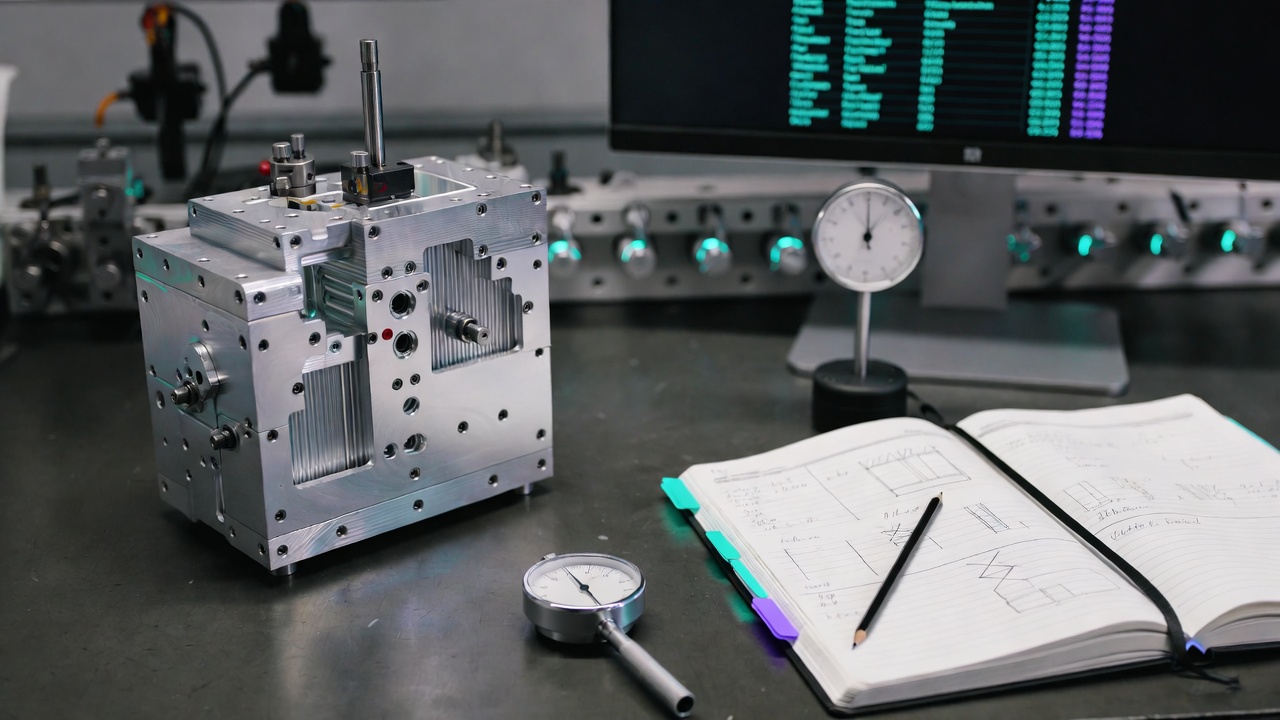
Ask an engineer in March what they tried last April and why they changed direction in May. Most can’t tell you. They aren’t careless. The work moved on, the prototype was rebuilt, and the reasoning stayed in their heads.
That gap is the root cause of most difficult R&D claims. The claim is written after the year ends, but the evidence only exists if it was captured at the time. An R&D documentation habit is the simplest way to close that gap.
Why the records go missing
Engineers focus on solving the problem in front of them, not on writing the story of what happened. Most work evidence these days is locked in various email chains. When we start asking what happened, we tend to get a sigh and the response, ‘I’ll have to look through my emails for that data’.
Yes, our expertise lies in reconstructing a narrative from the past twelve months of work, but such reconstructions are never perfect and inevitably omit key information.
HMRC compliance checks tend to ask the same questions: what was uncertain, how you knew, and what records you have.
What is worth writing down
You don’t need long documents. For each project, a few short notes covering these points will do more than a polished report written a year later.
- The problem, in plain terms: what you were trying to achieve and why the answer wasn’t readily available to a competent professional in the field.
- The options you considered and why you chose the ones you tried.
- What happened: results, measurements and failures. Noting failures matters. They are often the best evidence that the outcome was genuinely uncertain.
- Who worked on it and roughly how much of their time it took.
- What changed as a result, whether that was a new approach, a revised design or a decision to stop.
Keep it small, and use what you already have
Create a system that is simple to use and update. A complicated log will soon lead to low use and engagement among your technical staff.
- A brief monthly check-in per project beats an annual scramble. Memory is fresh, and small gaps are fixed before they become big ones.
- Point to existing records rather than duplicating them. Test logs, version-control commits, CAD revisions and design review notes are all evidence.
- Record time as you go. This could be as simple as adding a note at the monthly team meeting, where you estimate the time spent on the work just completed. Reasonably accurate monthly estimates of who spent how long on which project are far easier to defend than percentages reconstructed at year-end.
Where Cadence fits
To help clients with this ‘contemporaneous’ record-keeping, as HMRC likes to put it, we built Cadence. Cadence is an R&D project tracker that aims to make your life as simple as possible.
Instead of asking for everything once a year, Cadence runs monthly check-ins. Each client works through their projects with a short, guided interview for each one. Upload images and reports that help explain what you are doing. At the end of each session, you can complete a simple time-allocation form that already includes your staff names. If you start a new project, add it to the portal and start recording.
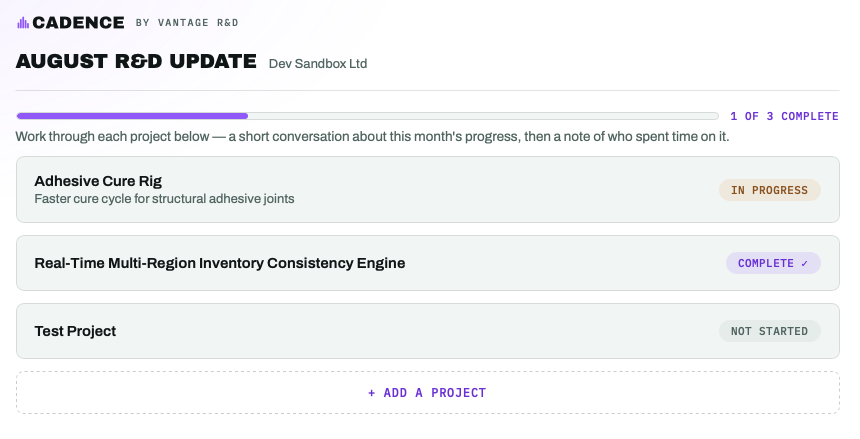
Over twelve months, you build a comprehensive record of the work you have done, dated and tied to the project it describes. We use it to help draft the technical report, and our team reviews and refines every report before it goes anywhere. Cost calculations are handled separately under fixed rules rather than by AI. Still, these connect to the time allocations you have already recorded, so they accurately represent the costs, not an estimate made months after the event.
None of this replaces the judgement of an engineer who understands the work. It simply means that judgement is applied to a clear record rather than to a hazy memory.
A note for accountants
If you refer clients to us, maintaining a regular evidence trail also makes your side easier. The costs and time assignments behind a claim are grounded in records made during the year, which helps when you review the figures alongside the accounts.
Where to start
You don’t need a bespoke tool to keep records or onerous internal systems; make it a habit to record what you are doing, as you do it. If you would prefer a system designed precisely for this, then Cadence is your answer.
If you’d like to discuss how this might work for your team, John or Jason would be glad to have an informal conversation with no obligation: www.vantagernd.co.uk/book. Alternatively, send us a brief overview of a current project, and we’ll record a personal video review with honest feedback: www.vantagernd.co.uk/review-your-project.
R&D tax relief rules change from time to time. This article is general information, not advice on your specific circumstances, so please seek professional advice before acting on it.