
Motorsport Teams & Suppliers could be eligible for R&D Tax Credits
Claiming R&D Tax Credits for Motorsport teams and suppliers
A large part of the industry is still unaware that this crucial funding is available to them by claiming tax credits through their corporation tax. If you are a limited company and have a full year's trading accounts, you may well be eligible for the scheme.
We have helped teams in the British Superbike Championship claim tax credits of more than £500,000 over the last two years. We are very knowledgeable about Motorsport in general and how the activities your team or company undertakes may well qualify for R&D tax credits, even if you might not think so.
What activity qualifies?
To qualify, a business needs to be seeking an advance in technology within its industry, with technological uncertainty evident in how to achieve it. This can be difficult to identify, but the simplest way to look at it is to ask yourself what technology and knowledge you would not want your competitors to have. Some motorsport examples could be:
Fuel or oil surge issues occur when converting a road vehicle for racing. New and previously unseen baffle designs resulting from this would qualify.
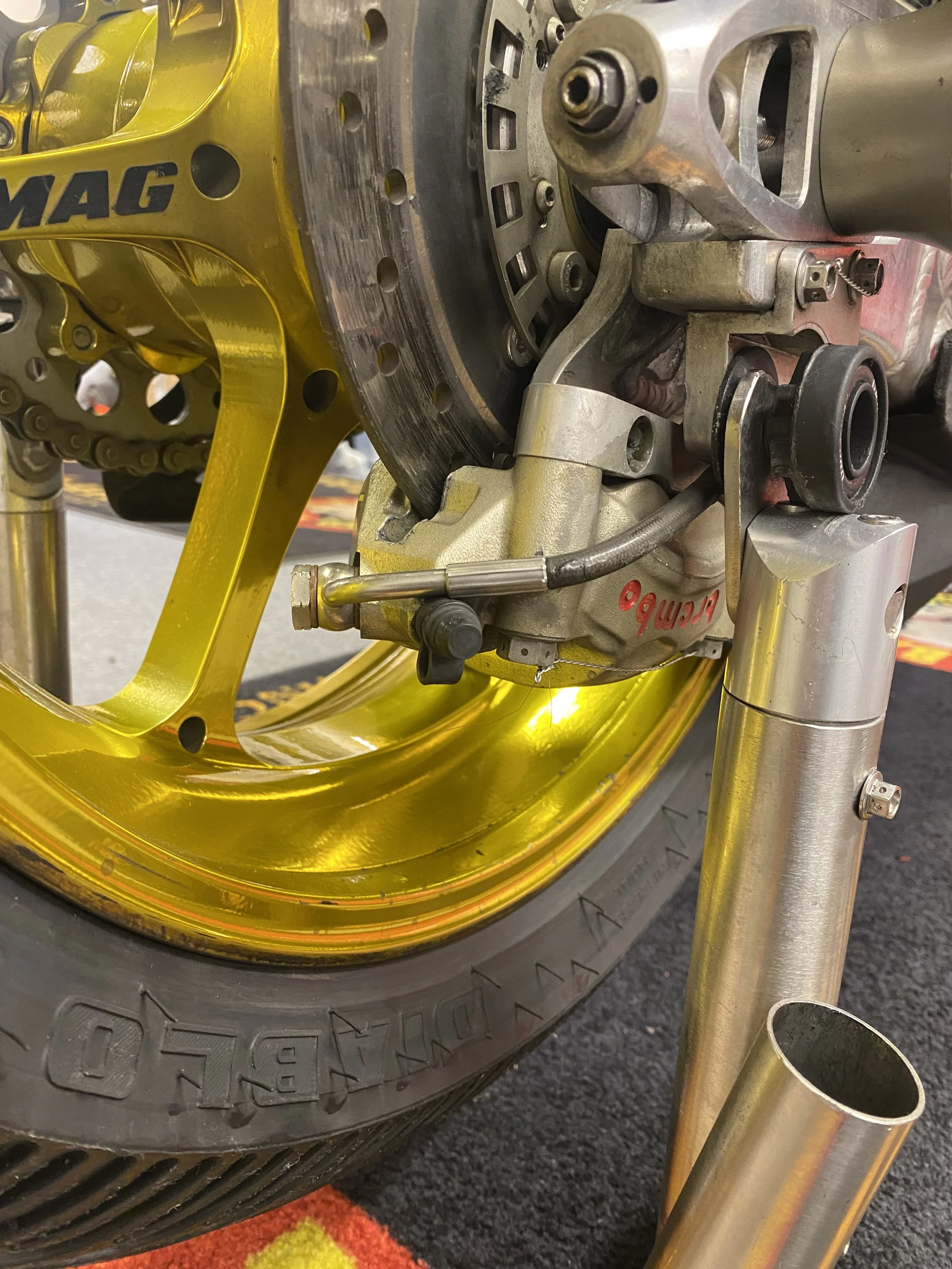
Nontrivial and non-routine changes to the suspension components to increase tyre life. For bike racing, this could be all new triple clamp designs, or significant changes to the rear linkage geometry.
Development of electronic control systems. This could be where the original electronics and rider/driver aids must be removed to meet championship regulations and replaced with a spec ECU. New protocols need to be developed to allow the new ECU to send and receive the correct signals to the engine and other systems.
Where the integration of one component resulted in unexpected problems elsewhere in the vehicle, requiring further development activity in the original or in the ‘new’ area.
What does not qualify?
Routine testing and integration of parts where the outcome would be expected. For example, changing the exhaust system for a ‘factory’ version, where it was already known in the public domain that it would increase the power output.
Testing a series of off-the-shelf components to determine which is the best one.
Fine-tuning suspension using known geometry and settings (tweaking)
Routine engine tuning and refreshes. Fitting a new camshaft and gas flowing through the cylinder head would be considered ‘business as usual’ activity.

How much could we receive?
The scheme can be very generous, with up to 33% of qualifying expenditure being returned as a tax credit for loss-making companies. Yes, even if you are loss-making (to any extent), you can still receive a cash credit. We have secured cash credits in excess of £100,000 for some of our loss-making clients.
How Long will it take?
We have a very flexible approach to collecting the information and we do not expect you to prepare anything in advance. We have a conversation with you to determine the technical activity (usually a couple of hours). We work with your accountants to collect the financial information, so you have very little to do in terms of collation. Once collated, we discuss the costs with you to determine which qualifies for the scheme.
Once we have collected the necessary technical and cost information from you (this usually takes us 1-2 weeks), the claim is submitted to HMRC and you should receive payment from HMRC within six weeks.
